


Case Study
Scalable, bilingual customer service for a growing tollway system.
Lighthouse Enterprises has supported the Illinois Tollway’s customers since October 2012, scaling staffing with rising call volumes and seasonal spikes while helping the agency meet its inclusive-hiring goals. From I-PASS account inquiries to violation notices and payments, the program has grown in scope and specialty as the Tollway’s needs have changed.
At a glance
- Client
- Illinois Tollway
The Illinois Tollway Authority (ITA) is the administrative agency that oversees the operations and maintenance of the state’s tollway system. - Services Lighthouse provides
-
- I-PASS account inquiries, transponder and sticker tag support
- Violation notices and credit card payments
- Password resets, account verification and contact updates
- Motorist assistance (*999) calls
- Systems and routing
-
- Client platforms: Twilio (customer engagement) and SAP (business management)
- Skills-based routing in English and Spanish
- Automated services built in from the start
- Program facts
-
- Supporting Illinois Tollway since October 2012
- 363 staffed agents
- 2.5 weeks of classroom instruction, then hands-on training on Tollway systems
- Call center housed in repurposed space at UIC’s former Student Center East
Program highlights
How the program has adapted
Growth here has meant absorbing new call types, new systems and sudden spikes without losing service levels, and doing it with a workforce that reflects the Tollway’s inclusive-hiring goals.
English + Spanish
Skills-based bilingual routing
Removed the need for costly outside translation services
2.5 weeks
Classroom instruction per agent
Followed by hands-on training on the Tollway’s customer management systems
Twilio + SAP
Agents work in the Tollway’s own platforms
With automated services built in from the start
01 The challenge
Scalable support for growing call volumes, with an inclusive workforce
In 2012 the Tollway had two primary goals: flexible contact center services to accommodate its growing call volumes, and employment opportunities for veterans and people with disabilities. It anticipated a consistent increase in call volume and needed a partner that could scale staffing accordingly, including targeted hiring, and manage customer calls effectively as demand grew.
Once the work began, the team had to navigate sudden spikes in call volume, continuous training as systems changed, evolving customer needs alongside process improvements, and staffing levels that shift with the seasons.
02 Our approach
An adaptable operation built around the Tollway’s systems
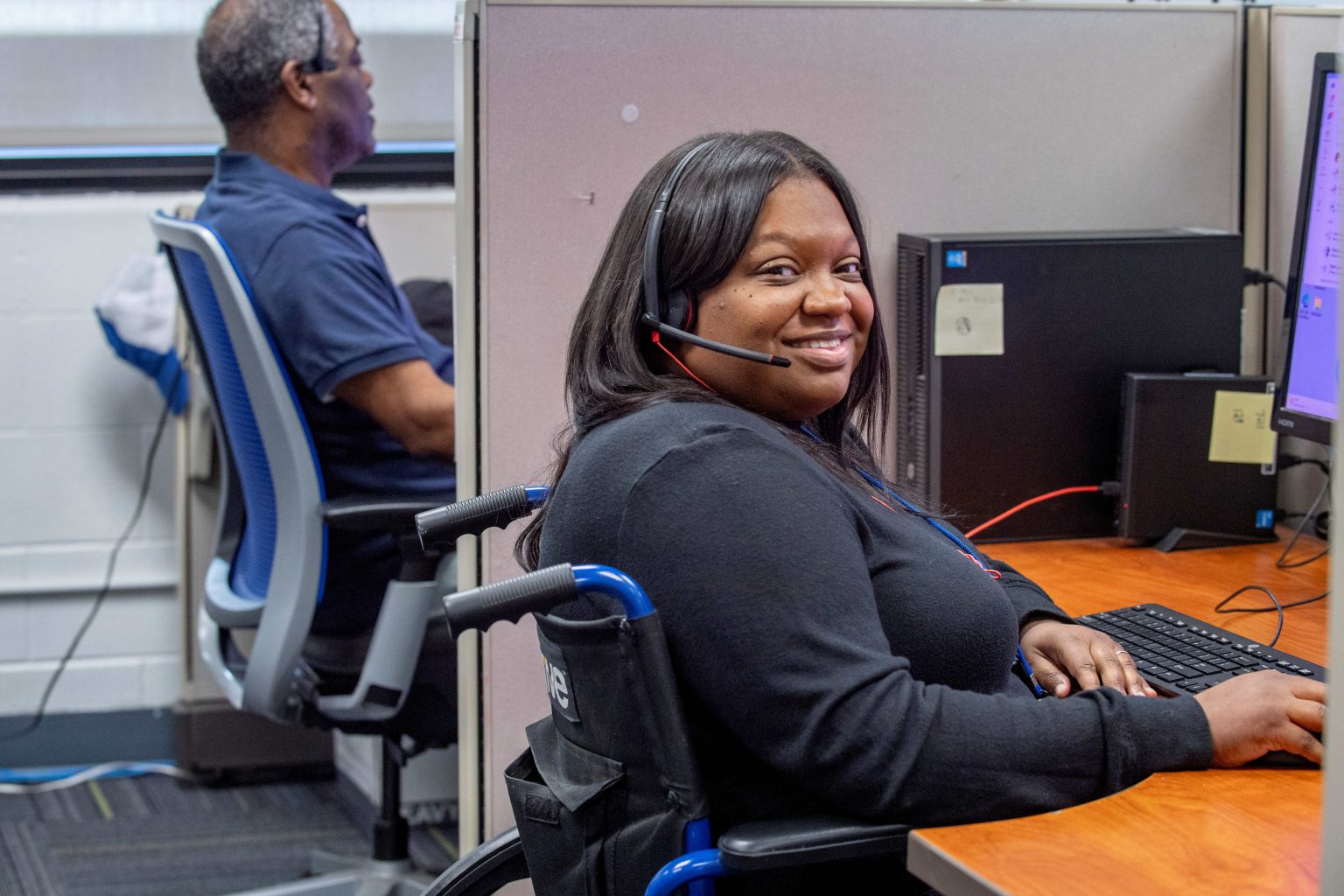
With white-glove service, Lighthouse recruited, trained and onboarded a workforce aligned to the Tollway’s staffing needs, and helped the agency meet its diversity goals by including people with disabilities and veterans on the team. To accommodate more workers, the Tollway repurposed space in what used to be Student Center East at the University of Illinois at Chicago and converted it into a call center.
Five steps that met the Tollway’s demands
- Began using client tools such as the Twilio customer-engagement and SAP business-management platforms.
- Included automated services from the start.
- Adapted to the rollout of I-PASS sticker tags, which caused a surge in call volume.
- Incorporated new services such as password reset support.
- Removed language barriers with bilingual call center agents.
Bilingual agents and a training process built for the job
Adding bilingual staff improved both efficiency and cost-effectiveness. Skills-based routing sends each inquiry to an agent with the right language skills, and with agents who speak English and Spanish the Tollway no longer needed costly external translation services. Before going live, every agent completes 2.5 weeks of classroom instruction on the Tollway’s call processes, followed by hands-on training on its customer management systems.
A cost-saving, COVID-era collaboration
When tollbooth clerks were reassigned to call center roles during the pandemic, Lighthouse handled overflow calls from September 2020 to October 2024 and supported the move to a hybrid model. Letting agents work remotely further reduced expenses on equipment and furniture.
03 Results
The advantages of Lighthouse’s skills and workforce
Through hybrid operations and reduced equipment needs, the Tollway has seen cost savings and greater organizational efficiency. The partnership has also delivered:
- Public image benefitsTollway customers have voiced appreciation for a partnership that employs workers who are blind, visually impaired, disabled and veterans
- Greater recognitionThe partnership has been recognized by high-profile entities, including the Illinois Secretary of State
- Added specialtiesTaking on motorist assistance (*999) calls (opens in a new tab) shows the program’s ability to specialize as it scales
- Resilience under pressureWhen a phishing scam caused a sudden 50% spike in calls, adaptive scheduling let the team reallocate resources immediately
The program continues to take on new services and specialties as the Tollway’s needs change. That flexibility comes from a customizable staffing structure and a proactive planning process that anticipates change rather than reacting to it.
A shared mission
Inclusive employment that funds other nonprofit programs
The partnership continues to emphasize the employment of people with disabilities and veterans. Working with the Illinois Tollway has allowed Lighthouse Enterprises to fund additional nonprofit programs, and we remain committed to improving workforce accessibility for people who are blind, visually impaired or disabled.
- Inclusive hiring, by design. The Tollway’s goal of employing veterans and people with disabilities was built into recruiting from the first day of the program.
- Mission funded by operations. Revenue from the partnership supports Chicago Lighthouse programs such as childcare and low vision clinic services.
- Recognized publicly. Customers and high-profile entities, including the Illinois Secretary of State, have recognized the partnership.
Partnership timeline
Growing with the Tollway since 2012
Each change in the Tollway’s operation became new work for the same team.
-
Oct 2012
The partnership begins
Flexible capacity for rising call volumes, and jobs for veterans and people with disabilities.
-
Sep 2020
A hybrid transition
As tollbooth clerks move into call center roles during the pandemic, Lighthouse takes their overflow calls and agents begin working remotely.
-
Nov 2022
Motorist assistance (*999)
The Tollway awards The Chicago Lighthouse the contract to handle calls to *999.
-
2024
I-PASS sticker tags
The rollout of sticker tags drives a surge in calls; overflow support for reassigned clerks concludes in October 2024.
Your operation
Running a high-volume public service line?
Tell us about your call volumes, seasonal peaks and language needs. We will walk through how the Tollway program was staffed, trained and routed, and whether the same model fits your agency.